
Introduction
Designer handbags are more than fashion accessories—they are symbols of craftsmanship, status, and long-term investment. Brands like Louis Vuitton, Gucci, Chanel, Prada, and Hermès have built global reputations based on quality, exclusivity, and attention to detail. However, with rising demand comes a growing market of counterfeit products that closely imitate original designs.
Today’s fake designer bags are more sophisticated than ever. Many replicas are designed to look nearly identical to authentic pieces, making it difficult for buyers to distinguish between real and fake. This is especially concerning for online shoppers and resale buyers who may unknowingly invest in counterfeit items.
Understanding how to identify fake vs original designer bags is essential for protecting your money and ensuring you receive genuine value. This detailed guide will walk you through every aspect of authentication—from materials and craftsmanship to logos, serial numbers, and seller verification—so you can confidently spot the difference.
Why It’s Important to Identify Fake Designer Bags
Buying a counterfeit bag is not just a financial loss; it also affects quality, durability, and resale value. Authentic designer bags are crafted using premium materials and undergo strict quality checks. In contrast, fake bags often use inferior materials that deteriorate quickly.
- Another important factor is resale value. Genuine designer handbags can retain or even increase their value over time, especially limited-edition or classic models.
- Counterfeit bags, on the other hand, have no resale value and cannot be authenticated.
- There are also ethical considerations. The counterfeit market is often linked to illegal activities, including labor exploitation and intellectual property theft.
- By purchasing authentic products, you support legitimate businesses and ethical manufacturing practices.
Finally, owning an authentic designer bag ensures that you experience the quality, durability, and prestige associated with the brand. Recognizing the difference between fake and original helps you make informed purchasing decisions.
Common Types of Fake Designer Bags
Before learning how to identify counterfeit bags, it is helpful to understand the different categories of replicas available in the market.
- Low-quality replicas are easy to identify. They often have visible flaws such as poor stitching, incorrect logos, and cheap materials.
- These are usually sold at very low prices and are targeted at buyers looking for budget options.
- Mid-quality replicas are more convincing. They may use better materials and mimic the overall design more closely, but they still lack the precision and craftsmanship of authentic bags.
- High-quality replicas, often referred to as “super fakes,” are the most difficult to identify. These bags replicate design details, logos, and even packaging.
- However, subtle differences in materials, finishing, and authentication markers still exist.
Understanding these categories helps you approach authentication with the right level of attention and caution.
Key Differences Between Fake and Original Designer Bags
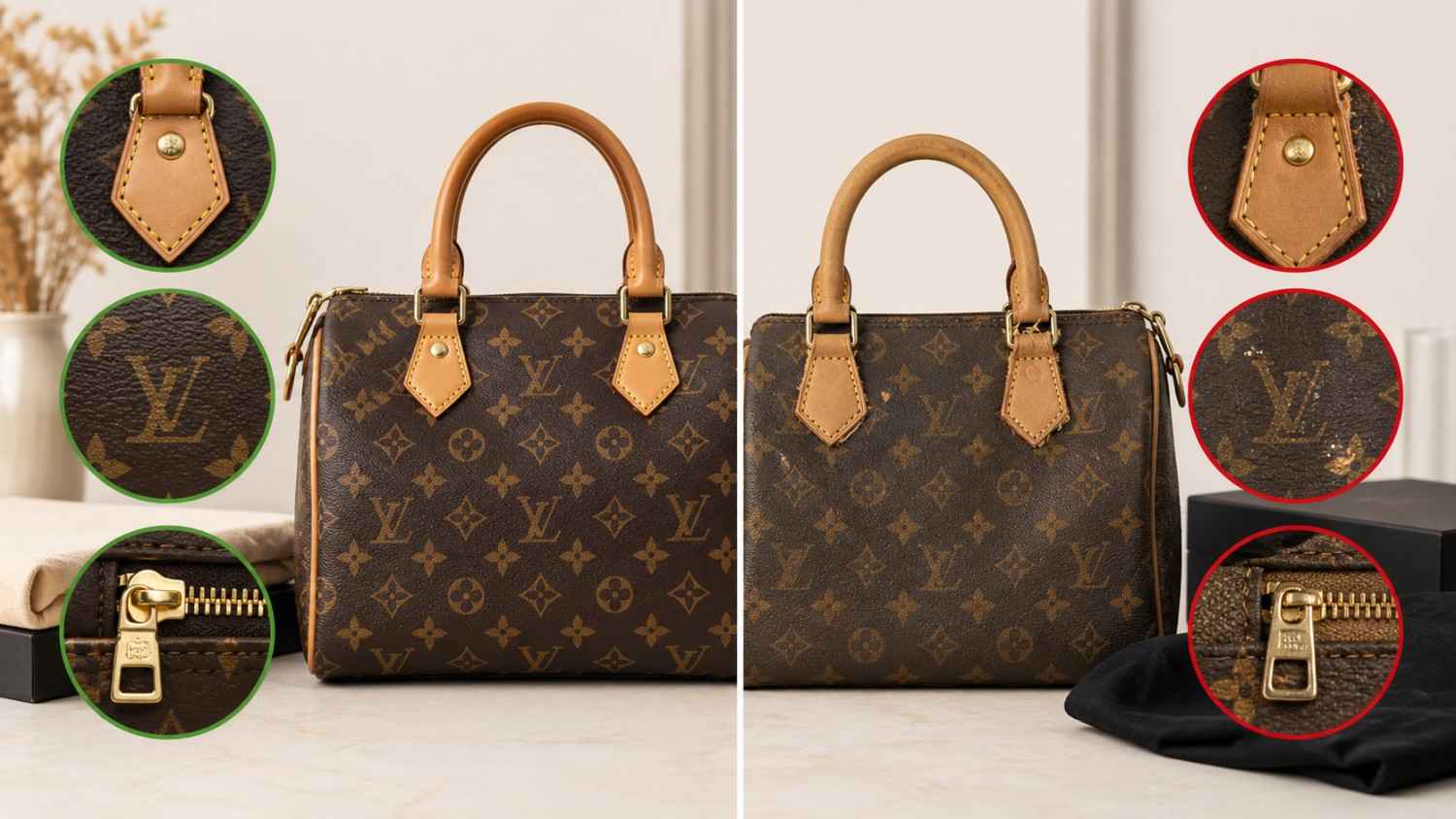
1. Material Quality
One of the most noticeable differences between authentic and fake designer bags is the quality of materials used.
- Original designer bags are made from premium materials such as full-grain leather, high-quality canvas, or durable fabrics. These materials feel smooth, consistent, and luxurious.
- Leather, in particular, develops a natural patina over time, enhancing its appearance.
- Fake bags often use synthetic or low-grade materials that feel stiff, overly shiny, or plasticky. The texture may be inconsistent, and the material may crack or peel after limited use.
Pay close attention to how the bag feels when you touch it. Authentic materials have a certain weight and softness that is difficult to replicate.
2. Stitching and Craftsmanship
Luxury brands are known for their precise craftsmanship. Every stitch in an original designer bag is carefully placed and evenly spaced.
- Authentic bags typically have straight, consistent stitching with no loose threads. The stitching is often done by skilled artisans and reflects a high level of attention to detail.
- In contrast, fake bags may have uneven stitching, loose threads, or irregular patterns. Even high-quality replicas can struggle to match the precision of original craftsmanship.
Examining the stitching closely is one of the simplest ways to identify authenticity.
3. Logo and Branding
Logos are a defining feature of designer handbags, and brands maintain strict standards for their appearance.
- Authentic logos are perfectly aligned, evenly spaced, and consistent in font and size. The placement of the logo is also carefully considered and remains consistent across products.
- Fake bags often have slight variations in logos, such as incorrect font, spacing issues, or misalignment. These differences may be subtle but become noticeable upon closer inspection.
Always compare the logo with official images from the brand’s website to identify discrepancies.
4. Hardware and Metal Details
Hardware elements such as zippers, clasps, and buckles play a significant role in determining authenticity.
- Original designer bags use high-quality metal hardware that feels solid and has a smooth finish. The hardware is often engraved with the brand’s logo and does not tarnish easily.
- Fake bags may use lightweight or hollow hardware that feels cheap. The finish may be uneven, and engravings may appear shallow or poorly executed.
Testing the weight and durability of hardware can provide valuable clues about authenticity.
5. Serial Numbers and Authentication Codes
Most designer brands include serial numbers, date codes, or authentication tags in their bags.
- Authentic serial numbers follow a specific format and are placed in consistent locations depending on the brand. These codes can often be verified through official sources or authentication services.
- Fake bags may include serial numbers, but they are often incorrect, duplicated, or poorly printed. The placement may also be inconsistent with genuine products.
Researching the brand’s serial number system can help you identify discrepancies.
6. Packaging and Accessories
Designer bags come with high-quality packaging, including dust bags, boxes, and authenticity cards.
- Authentic packaging is made from premium materials and reflects the brand’s identity. Dust bags are usually soft, well-stitched, and branded correctly.
- Fake bags may come with packaging that looks similar but lacks quality. The materials may feel cheap, and branding may be inconsistent.
While packaging alone cannot confirm authenticity, it can support your overall assessment.
7. Price Point
Price is often a strong indicator of authenticity. Designer bags are expensive due to their quality and brand value.
- If a deal seems too good to be true, it probably is. Extremely low prices are a red flag, especially for popular or limited-edition models.
- While discounts may be available during sales or in resale markets, they are usually within a reasonable range.
Always compare prices with official retailers to ensure credibility.
Step-by-Step Guide to Authenticating a Designer Bag
- Step 1: Research the Brand: Before making a purchase, familiarize yourself with the brand’s design, materials, and authentication features. Visit the official website and study product images carefully.
- Step 2: Examine the Material: Touch and inspect the material to assess its quality. Look for consistency, texture, and overall finish.
- Step 3: Check the Stitching: Inspect the stitching for uniformity and precision. Any irregularities may indicate a fake product.
- Step 4: Verify the Logo: Compare the logo with official images. Pay attention to font, spacing, and alignment.
- Step 5: Inspect Hardware: Check the weight, finish, and engravings on hardware components.
- Step 6: Validate Serial Numbers: Look for serial numbers or authentication codes and verify them if possible.
- Step 7: Evaluate the Seller: Purchase from authorized retailers or trusted resellers. Check reviews, ratings, and return policies.
Online Shopping Tips to Avoid Fake Bags
Buying designer bags online requires extra caution. Always shop from official brand websites or authorized retailers.
- If purchasing from resale platforms, choose sellers with verified authenticity guarantees.
- Read customer reviews and check for detailed product descriptions.
- Avoid listings with limited images or vague information.
- High-quality sellers usually provide multiple images and clear details.
Using third-party authentication services can provide additional assurance, especially for high-value purchases.
Popular Designer Brands and Their Authentication Signs
Different brands have unique authentication features.
- Louis Vuitton uses date codes and high-quality canvas with precise patterns.
- Chanel includes serial numbers and authenticity cards, along with high-quality quilting and hardware.
- Gucci uses specific serial number formats and premium materials.
- Hermès is known for its exceptional craftsmanship and unique stamp markings.
Understanding brand-specific features can improve your ability to identify authentic bags.
Common Mistakes to Avoid
Relying solely on price as an indicator can be misleading. Some fake bags are sold at high prices to appear authentic.
- Ignoring small details such as stitching or logo alignment can lead to incorrect conclusions.
- Trusting unverified sellers increases the risk of purchasing counterfeit products.
- Skipping research before buying can result in costly mistakes.
When to Use Professional Authentication Services
If you are unsure about a bag’s authenticity, consider using professional authentication services.
- These experts analyze multiple factors, including materials, craftsmanship, and serial numbers.
- They provide detailed reports that confirm authenticity.
- Professional services are especially useful for high-value purchases or resale transactions.
Conclusion
Identifying fake vs original designer bags requires attention to detail, research, and careful inspection. While counterfeit products have become more advanced, they still lack the quality and precision of authentic designer items.
By focusing on material quality, craftsmanship, branding, hardware, and authentication codes, you can confidently distinguish between genuine and fake bags. Combining these checks with smart purchasing decisions ensures that you invest in authentic products.
Whether you are buying your first designer bag or adding to your collection, understanding these principles helps you make informed choices and avoid costly mistakes.