
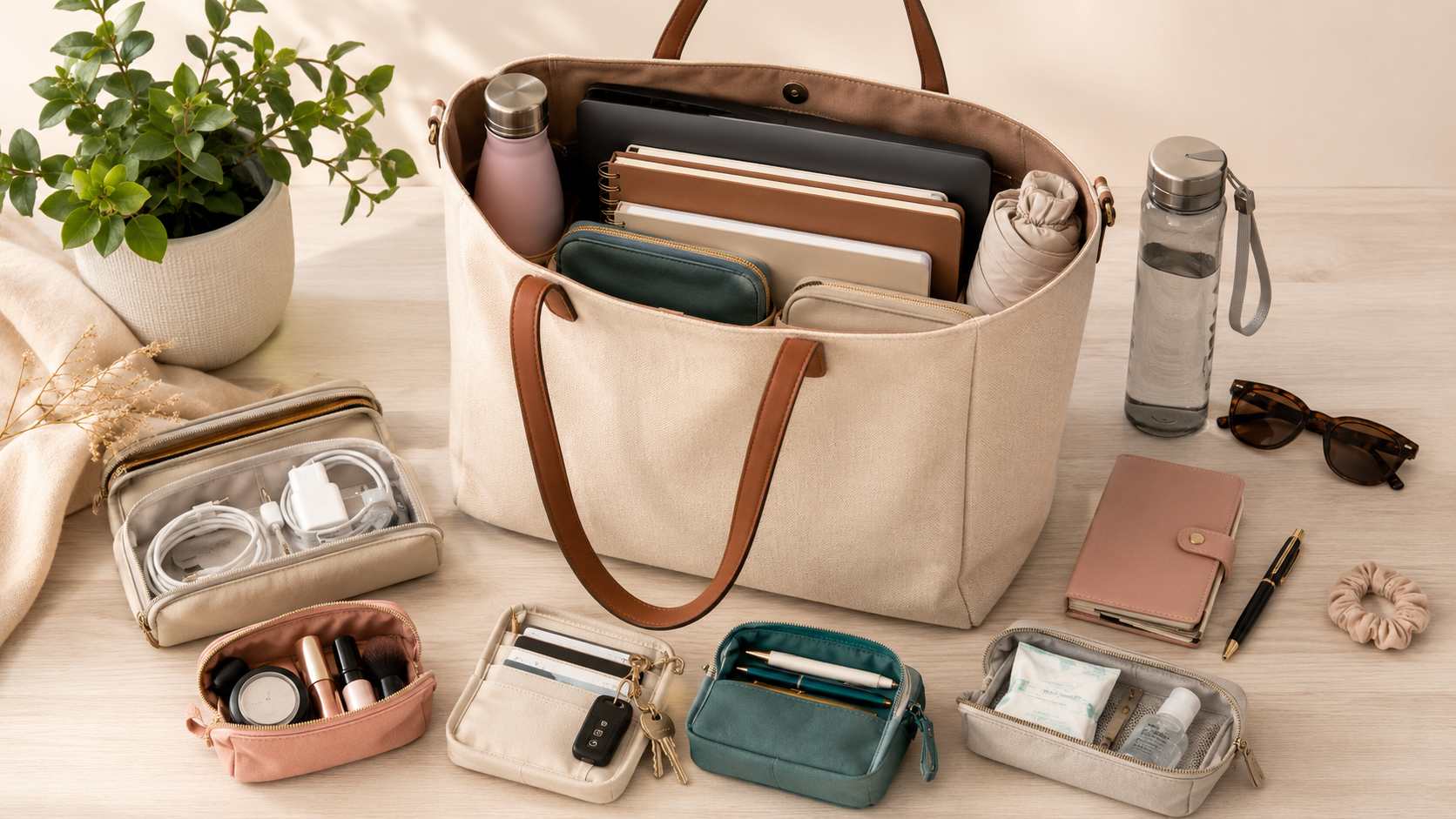
Introduction
Tote bags have become one of the most practical and stylish accessories in modern life. Whether used for work, college, shopping, travel, or daily errands, tote bags offer the perfect balance of fashion and functionality. Their spacious design allows people to carry everything from laptops and notebooks to makeup, chargers, water bottles, and personal essentials.
However, the biggest advantage of tote bags can also become their biggest problem. Because tote bags are large and open, they can quickly turn into cluttered spaces where important items are difficult to find. Many people struggle with messy tote bags filled with tangled earphones, loose receipts, leaking pens, unnecessary items, and forgotten products sitting at the bottom for weeks.
Learning how to organize your tote bag properly can completely change your daily routine. A well-organized tote bag saves time, reduces stress, protects your belongings, and improves productivity. Instead of constantly searching for keys or digging through random items, you can access everything quickly and efficiently.
This complete guide explores practical strategies, smart organization techniques, essential accessories, and daily habits that will help you organize your tote bag like a professional.
Why Tote Bag Organization Matters
Saves Time During Busy Days
One of the main reasons tote bag organization matters is convenience. People often waste valuable time searching for items hidden inside cluttered bags. Whether it is your phone charger, office ID, wallet, or lipstick, disorganization can create unnecessary frustration.
An organized tote bag allows you to:
- Find items quickly
- Avoid unnecessary digging
- Improve daily efficiency
- Reduce stress during travel or work
Small organizational changes can make daily routines much smoother.
Protects Your Belongings
When items are tossed carelessly into a tote bag, they can easily become damaged. Sharp objects may scratch electronics, makeup products may spill, and liquids can leak onto important documents.
Proper organization helps:
- Prevent spills and breakage
- Protect electronics and valuables
- Keep documents wrinkle-free
- Maintain hygiene inside the bag
Keeping items separated reduces the chances of damage significantly.
Reduces Unnecessary Clutter
Many people carry items they no longer need simply because they forget what is inside their bags. Receipts, wrappers, expired products, and unused accessories often pile up over time.
Regular organization helps eliminate:
- Old receipts
- Empty containers
- Unnecessary duplicates
- Random clutter
A cleaner bag creates a more organized lifestyle overall.
Understanding the Purpose of Your Tote Bag
Identify Your Daily Needs
Before organizing your tote bag, it is important to understand how you use it. A work tote bag requires different organization compared to a travel tote or college bag.
Ask yourself:
- What items do I use daily?
- Which essentials must stay accessible?
- Which items are rarely used?
- Do I carry electronics or documents?
Knowing your priorities helps create a functional organization system.
Avoid Carrying Unnecessary Items
Many tote bags become heavy because people carry items “just in case.” Overpacking not only creates clutter but can also damage the shape of the bag and strain your shoulders.
Remove items you rarely use and focus only on daily essentials. Examples of unnecessary items may include:
- Expired makeup
- Old receipts
- Multiple pens
- Extra chargers
- Unused notebooks
Keeping only necessary items creates more space and improves comfort.
Start with a Complete Clean-Out
Empty Everything from the Bag
The first step toward proper organization is removing everything from the tote bag.
Lay all items on a flat surface and inspect them carefully. This process helps you understand how much clutter has accumulated over time.
You may discover:
- Forgotten items
- Expired products
- Damaged accessories
- Unnecessary duplicates
A full clean-out gives you a fresh start.
Clean the Interior Properly
Once empty, clean the inside of the bag thoroughly. Dust, crumbs, stains, and dirt often collect at the bottom.
Use:
- A soft cloth
- Mild soap solution
- Small vacuum for debris
Allow the bag to dry completely before reorganizing. Regular cleaning helps maintain hygiene and prevents odors.
Categorize Your Essentials
Professional organization becomes easier when items are grouped by purpose.
Common categories include:
- Tech essentials
- Beauty products
- Personal care items
- Stationery
- Wallet and keys
- Snacks and water bottle
Categorization prevents random clutter and improves accessibility.
Prioritize Frequently Used Items
Items used most often should remain easiest to access.
Examples include:
- Phone
- Wallet
- Keys
- Hand sanitizer
- Earphones
Rarely used items can stay in deeper compartments or pouches.
Use Small Pouches for Better Organization
Why Pouches Are Essential
One of the best tote bag organization methods is using smaller pouches. Since most tote bags have large open interiors, pouches help divide space effectively.
Benefits of pouches include:
- Easier organization
- Faster access to items
- Reduced clutter
- Better protection for small products
Different pouches can be assigned for different categories.
Types of Pouches to Use
Useful pouch options include:
- Makeup pouch
- Tech organizer
- Coin pouch
- Medicine pouch
- Travel-size toiletry pouch
Transparent or labeled pouches make identification easier.
Organizing Tech Accessories
Protect Electronics Carefully
Modern tote bags often carry electronic devices such as:
- Laptops
- Tablets
- Chargers
- Earphones
- Power banks
Without organization, cables become tangled and devices may get scratched. Use padded sleeves and cable organizers to keep electronics protected.
Keep Chargers and Cables Tangle-Free
Loose cables create clutter very quickly.
Solutions include:
- Velcro cable ties
- Small zip pouches
- Dedicated tech organizers
Keeping cables organized saves time and prevents damage.
Managing Beauty and Personal Care Products
Prevent Makeup Spills
Makeup products can create major messes inside tote bags if not stored properly. Store products in a waterproof cosmetic pouch to avoid leaks and stains.
Essential beauty items may include:
- Lip balm
- Compact mirror
- Hand cream
- Tissues
- Mini perfume
Avoid carrying too many products unnecessarily.
Organize Hygiene Essentials
Personal hygiene products should remain accessible but separated from electronics and food.
Useful hygiene essentials include:
- Hand sanitizer
- Wet wipes
- Tissues
- Feminine hygiene products
- Face masks
Dedicated compartments improve cleanliness and convenience.
Keeping Documents and Papers Organized
Use Slim Folders or Organizers
Loose papers can wrinkle, tear, or become difficult to locate.
Use:
- Document sleeves
- Slim folders
- Laptop compartments
This is especially important for office workers and students.
Avoid Paper Clutter
- Old bills, receipts, and notes accumulate quickly inside tote bags.
- Make it a habit to remove unnecessary papers regularly.
Smart Placement Strategies
Heavier Items at the Bottom
Place heavier items such as laptops or water bottles at the bottom center of the bag for better weight distribution.
This helps:
- Maintain bag shape
- Reduce shoulder strain
- Improve balance
Frequently Used Items Near the Top
Keep items you reach for often near the top or in side pockets.
Examples include:
- Phone
- Wallet
- Transit card
- Sunglasses
This improves accessibility throughout the day.
The Importance of Tote Bag Inserts
What Is a Tote Bag Insert?
A tote bag insert is an organizer designed to fit inside large bags. It contains multiple compartments that separate belongings neatly.
Bag inserts are especially useful for:
- Open tote bags
- Large handbags
- Travel totes
- Benefits of Using Inserts
Advantages include:
- Better compartmentalization
- Faster organization
- Easier bag switching
- Improved structure
Many people find inserts essential for maintaining order daily.
How to Organize a Work Tote Bag
Carry Only Work Essentials
Work tote bags often become overloaded with unnecessary items.
Focus on essentials such as:
- Laptop
- Charger
- Notebook
- Pens
- Water bottle
- Lunch container
Avoid carrying unrelated items that create clutter.
Keep Professional Items Protected
Store important documents and electronics securely to maintain professionalism and avoid damage.
A well-organized work tote also creates a more polished impression.
How to Organize a Travel Tote Bag
Prioritize Accessibility
Travel tote bags should allow easy access to important items.
Keep these near the top:
- Passport
- Tickets
- Phone charger
- Snacks
- Water bottle
Use Separate Compartments
Travel organization becomes easier when categories remain separated.
Use dedicated pouches for:
- Toiletries
- Electronics
- Documents
- Medications
This prevents confusion during security checks and transit.
How to Organize a College Tote Bag
Balance Weight Properly
Students often carry:
- Books
- Tablets
- Stationery
- Water bottles
Distribute weight evenly to avoid discomfort.
Avoid Overpacking
Only carry materials needed for the day. Excess books and supplies create unnecessary strain and clutter.
Daily Habits for Maintaining an Organized Tote Bag
Spend Five Minutes Every Evening
A quick daily reset prevents clutter from building up.
Remove:
- Trash
- Receipts
- Empty wrappers
Return misplaced items to their designated pouches.
Reevaluate Contents Weekly
Weekly organization helps identify unnecessary items and maintain efficiency.
Ask yourself:
- Did I use this item this week?
- Is this essential?
- Does this belong somewhere else?
Regular maintenance keeps your tote bag functional long-term.
Common Tote Bag Organization Mistakes
Carrying Too Many “Just in Case” Items
Overpacking is one of the most common mistakes.
Extra items increase:
- Bag weight
- Clutter
- Stress on straps
Minimalism improves organization significantly.
Ignoring Small Pouches
- Throwing everything directly into the bag creates chaos.
- Small organizers dramatically improve accessibility and cleanliness.
Neglecting Regular Cleaning
- Dirty bags collect bacteria, dust, and odors over time.
- Cleaning regularly helps maintain both hygiene and bag durability.
Best Accessories for Tote Bag Organization
Useful accessories include:
- Bag inserts
- Cosmetic pouches
- Cable organizers
- Key holders
- Mini document folders
- Reusable zip bags
These small additions make organization much easier.
Benefits of an Organized Tote Bag
An organized tote bag provides several long-term benefits:
- Faster access to essentials
- Reduced stress
- Better productivity
- Cleaner lifestyle habits
- Improved protection for belongings
It also creates a sense of control and preparedness during busy routines.
Conclusion
A tote bag is designed to simplify daily life, but without proper organization, it can quickly become messy and stressful. Learning how to organize your tote bag like a pro helps improve efficiency, protect your belongings, and create a more functional everyday routine.
From using pouches and inserts to categorizing essentials and maintaining regular cleaning habits, small changes can make a significant difference. Whether you use your tote bag for work, travel, college, or daily errands, proper organization allows you to maximize both style and practicality.
An organized tote bag is not just about appearance. It reflects preparedness, productivity, and smart daily habits that make life easier and more efficient.