
Introduction
Handbags are an essential part of everyday life. They carry personal belongings, complement outfits, and often become long-term fashion investments. However, as handbag collections grow, keeping them organised becomes increasingly challenging. Many people struggle with cluttered closets, overflowing shelves, tangled straps, and bags losing their original shape because of improper storage.
Handbag organisation is not just about aesthetics. Proper organisation helps maintain the quality, structure, and lifespan of bags while also making daily routines more efficient. When handbags are stored correctly, they remain easy to access, protected from damage, and visually appealing.
A disorganised handbag collection can create several problems. Bags stacked on top of each other may develop creases and scratches. Leather bags may lose shape, while delicate materials can become damaged due to dust, humidity, or poor ventilation. In small living spaces, lack of organisation can also make storage areas feel cramped and chaotic.
Fortunately, effective handbag organisation does not require a large walk-in closet or expensive storage systems. With smart planning and practical techniques, even small spaces can accommodate handbag collections efficiently. Simple solutions like shelf dividers, clear storage boxes, hooks, drawer organisers, and nesting methods can transform cluttered storage into a clean and functional system.
This guide explores detailed handbag organisation strategies, practical storage methods, maintenance tips, and long-term solutions for maximising space while protecting your bags.
Why Handbag Organisation Matters
Many people underestimate the importance of proper handbag organisation until damage begins to appear. Bags that are carelessly stored often deteriorate much faster than properly maintained ones.
- One of the biggest benefits of handbag organisation is preserving shape and structure. Handbags are designed with reinforced bases, linings, and carefully balanced construction.
- When bags are crushed under other items or hung incorrectly, they can lose shape permanently. Proper organisation prevents sagging, stretching, and creasing.
- Organisation also improves accessibility. Searching through piles of bags every morning wastes time and creates unnecessary frustration.
- An organised system allows users to quickly find the right bag for work, travel, events, or casual outings.
- Another important factor is cleanliness and maintenance. Bags stored in dusty or humid conditions are more likely to develop stains, mold, odor, or fading.
- Good organisation helps protect handbags from environmental damage.
For people with growing collections, organisation also provides better visibility. When every bag is visible and accessible, it becomes easier to rotate usage instead of repeatedly using the same few bags.
Many handbag enthusiasts on online communities also mention that organised storage encourages them to appreciate and use their collections more often rather than forgetting bags hidden in storage.
Common Handbag Storage Mistakes
Before discussing effective organisation methods, it is important to understand common mistakes that damage handbags over time.
- One of the biggest mistakes is stacking bags on top of each other. This compresses materials, distorts shape, and may scratch delicate surfaces.
- Another common mistake is hanging heavy bags by their straps for long periods. This stretches handles and weakens attachment points.
- Improper storage environments also create problems. Basements, humid rooms, or direct sunlight can damage leather, faux leather, and fabric materials. Reddit users frequently mention humidity and poor ventilation as major concerns for long-term handbag storage.
- Overstuffing storage shelves can also reduce airflow and increase friction between bags. Similarly, storing bags without support causes them to collapse inward over time.
- Using plastic bags for long-term storage is another mistake because trapped moisture may encourage mold growth.
Understanding these problems helps create a better organisation system that protects bags while maximising space.
Understanding Different Handbag Storage Needs
Not all handbags require the same storage method. Different materials, sizes, and structures need different care.
Structured leather handbags require shape retention and protection from pressure. These bags should be stored upright and lightly stuffed.
- Soft fabric bags are more flexible and can sometimes be folded carefully, although long-term folding may create creases.
- Clutches and evening bags need scratch protection because decorative surfaces are often delicate.
- Luxury handbags require additional protection from dust, sunlight, and humidity. Many owners prefer storing them in dust bags while keeping them visible enough for regular rotation.
- Travel bags and oversized totes require more vertical space and stronger support because of their size and weight.
Recognising the unique needs of each type of handbag is the foundation of effective organisation.
Using Shelf Dividers for Better Organisation
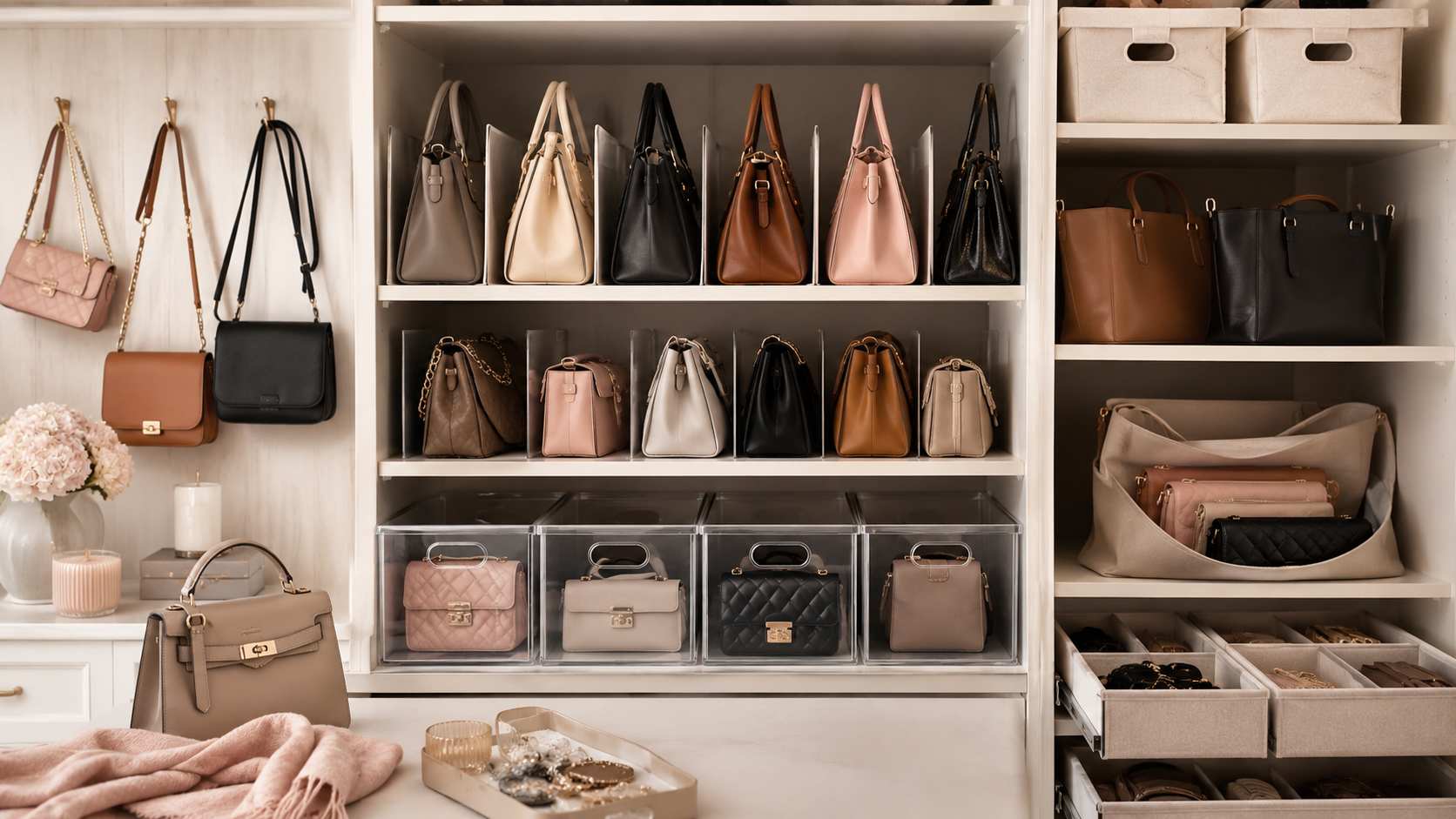
Shelf dividers are among the most effective handbag storage tools. They create individual sections on shelves, preventing bags from falling into each other or becoming compressed.
- Without dividers, handbags often lean sideways, causing straps to tangle and shapes to distort. Shelf dividers solve this problem by giving each bag its own designated space.
- Vertical organisation is particularly useful because it maximises shelf capacity. Taller bags can be placed at the back while smaller bags remain visible at the front.
- Clear acrylic dividers are especially popular because they maintain visibility without making shelves appear crowded. They also create a cleaner and more luxurious display aesthetic.
Shelf dividers work well for:
- Structured handbags
- Totes
- Satchels
- Medium-sized shoulder bags
For small spaces, adjustable dividers provide flexibility because compartments can be resized as collections change.
Proper spacing between bags is important. Overcrowding shelves defeats the purpose of organisation and increases wear.
Maximising Vertical Storage Space
One of the biggest mistakes in handbag organisation is ignoring vertical space. Many closets and storage areas have unused upper sections that can significantly increase storage capacity.
- Using vertical shelves, hanging systems, and stacked organisers helps create more storage without requiring additional floor space.
- Tiered arrangements are particularly effective because they allow visibility while maintaining accessibility. Instead of stacking bags directly on top of each other, vertical arrangements separate them clearly.
- Many small-space handbag owners also use rotating shelves, wall-mounted systems, or over-the-door storage to optimise compact spaces.
Utilising vertical space also improves airflow between bags, reducing humidity and preventing dust buildup.
Hooks and Wall-Mounted Storage Systems
Hooks and racks provide another practical storage solution, especially for small apartments or limited closet spaces.
- Wall-mounted hooks allow frequently used bags to remain visible and accessible. Decorative wall racks can also turn handbag storage into part of room decor.
- Over-the-door hooks are useful for lightweight bags and crossbody styles. They make use of otherwise unused space without permanent installation.
However, heavy handbags should not remain hanging for extended periods because straps may stretch over time. Hooks work best for:
- Lightweight totes
- Crossbody bags
- Fabric handbags
- Daily-use bags
Padded hooks are ideal for delicate handles because they reduce pressure marks.
When installing hooks, spacing is important. Bags should not touch each other excessively, as friction may damage surfaces.
Clear Storage Boxes and Transparent Organisers
Clear storage boxes are increasingly popular for handbag organisation because they provide visibility while protecting bags from dust.
Transparent boxes eliminate the need to open containers repeatedly while searching for a specific bag. This saves time and reduces handling.
These boxes are especially useful for:
- Seasonal handbags
- Luxury bags
- Occasion bags
- Rarely used collections
Many handbag collectors prefer acrylic storage because it creates a boutique-style appearance while keeping bags protected.
To maximise effectiveness:
- Use acid-free tissue paper to maintain shape
- Avoid overcrowding boxes
- Label boxes if needed
- Ensure ventilation to prevent moisture buildup
Clear storage also encourages better rotation because bags remain visible instead of forgotten in hidden storage.
Storing Smaller Bags Inside Larger Bags
Nesting bags is one of the most efficient space-saving methods. This technique involves storing smaller handbags inside larger totes or travel bags.
This method works particularly well for:
- Clutches
- Wallets
- Mini bags
- Small crossbody bags
Nesting not only saves space but also helps larger bags maintain shape.
However, proper protection is essential. Smaller bags should be wrapped in soft fabric or tissue paper before being placed inside larger bags to avoid scratches.
Many collectors describe nesting as one of the most effective storage solutions for limited closet space because it dramatically reduces shelf usage.
Drawer Organisers for Small Bags and Accessories
Drawer organisers are highly effective for clutches, wallets, chains, straps, and compact handbags.
Compartmentalised trays prevent smaller items from becoming tangled or misplaced.
Adjustable dividers allow drawers to accommodate different bag sizes and accessories. Vertical storage methods within drawers also improve visibility and access.
Many people also use small bins or pouches inside drawers to separate:
- Tech accessories
- Cosmetics
- Bag charms
- Straps
- Keys
Organised drawers create a cleaner system and reduce time spent searching for small essentials.
Using Bag Organisers and Inserts
Bag organisers and inserts help maintain structure while improving internal organisation.
These inserts create compartments inside handbags, preventing clutter and making it easier to switch bags without unpacking everything.
Bag inserts are especially useful for:
- Large tote bags
- Work bags
- Travel handbags
They also protect interior linings from spills, scratches, and stains.
Structured inserts help prevent slouching, particularly in soft leather bags.
Many handbag owners use removable organisers because they simplify transitions between daily-use bags.
Organising Bags by Category
Creating categories improves accessibility and simplifies daily use.
Some people organise bags by:
- Occasion
- Size
- Color
- Season
- Frequency of use
Handbag enthusiasts online often debate which system works best depending on collection size and lifestyle.
For example:
- Frequently used bags should remain at eye level
- Seasonal bags can be stored higher or deeper in closets
- Occasion bags may remain in dust covers until needed
A category-based system reduces clutter and helps maintain order long term.
Protecting Bags While Organising
Organisation should always focus on protection as much as storage.
- Stuffing bags with tissue paper or handbag pillows helps maintain shape.
- Dust bags protect surfaces from scratches and fading. However, completely hiding bags may reduce visibility and rotation.
- Ventilation is extremely important, especially in humid environments. Several handbag owners recommend avoiding airtight storage because trapped humidity may damage leather and faux leather materials.
- Silica packets can help control moisture in enclosed spaces.
Sunlight exposure should also be minimised because UV rays may cause fading or cracking.
Handbag Organisation for Small Spaces
Small apartments and compact closets require creative storage strategies.
Some effective small-space solutions include:
- Over-the-door organisers
- Vertical shelving
- Under-bed storage
- Rotating shelves
- Wall-mounted racks
Many handbag owners living in smaller homes rely heavily on multifunctional storage systems and careful rotation.
Using transparent organisers and keeping only frequently used bags accessible can prevent clutter while maintaining functionality.
Maintaining an Organised Handbag Collection
Organisation is not a one-time task. Maintaining order requires consistent habits.
- Simple weekly routines help prevent clutter from returning. Returning bags to designated spaces after use is one of the easiest ways to maintain organisation.
- Regular decluttering is also important. Bags that are damaged beyond repair or rarely used may be donated, sold, or stored separately.
- Rotating handbags seasonally keeps collections fresh and prevents overuse of a few favorite bags.
Many handbag enthusiasts also review their collections yearly to reassess storage needs and remove unnecessary clutter.
The Psychological Benefits of Organisation
An organised handbag collection does more than save space. It also creates a sense of calm and efficiency.
- Cluttered environments often contribute to stress and frustration. Organised storage systems improve visibility, reduce decision fatigue, and simplify daily routines.
- Many people also feel more connected to their belongings when items are properly displayed and maintained.
- An organised collection transforms handbags from clutter into curated accessories that enhance personal style and functionality.
Conclusion
Handbag organisation is about much more than neat shelves or attractive displays. Proper storage protects bags from damage, extends their lifespan, improves accessibility, and maximises available space.
Whether using shelf dividers, hooks, drawer organisers, clear storage boxes, or nesting techniques, the key is creating a system that fits both lifestyle and storage limitations.
Small organisational changes can significantly improve how handbags are stored, maintained, and used. Consistent care, proper ventilation, and thoughtful arrangement ensure that handbags remain functional, beautiful, and easy to access for years.
With the right approach, even a growing handbag collection can remain organised, protected, and visually appealing without overwhelming available space.