
Introduction
Handbags are more than just fashion accessories—they are daily essentials that reflect your personal style while carrying everything you need. Whether it’s a luxury designer bag, a sturdy office tote, or a casual crossbody, proper care is essential to maintain its appearance and extend its lifespan.
Over time, handbags are exposed to dust, dirt, oils from hands, accidental spills, and environmental factors like humidity and sunlight. Without proper cleaning and maintenance, even the highest-quality bags can deteriorate, lose their shape, or develop permanent stains.
The good news is that with the right techniques, tools, and habits, you can keep your handbags looking new and functional for years. This guide provides a comprehensive approach to cleaning, maintaining, and storing handbags based on their material and usage.
Why Handbag Maintenance Is Important
Taking care of your handbags is not just about keeping them clean—it’s about protecting your investment and ensuring long-term usability.
Key Benefits of Proper Maintenance
Regular care helps:
- Extend the lifespan of your handbag
- Maintain its original color and texture
- Prevent permanent stains and damage
- Preserve the structure and shape
- Increase resale value for luxury items
- Reduce the need for frequent replacements
A well-maintained handbag not only looks better but also performs better over time.
Understanding Different Handbag Materials
Before cleaning your handbag, it is crucial to identify its material. Each material requires a different cleaning approach.
Common Types of Handbag Materials
- Genuine leather
- Faux leather (synthetic leather)
- Suede or nubuck
- Canvas or fabric
- Nylon or polyester
- Patent leather
Using the wrong cleaning method can cause discoloration, cracking, or irreversible damage. Always choose techniques suitable for the specific material.
How to Clean Leather Handbags
Leather is one of the most popular and durable materials used in handbags, but it requires careful maintenance.
Step-by-Step Cleaning Process
- Empty the bag completely and shake out debris
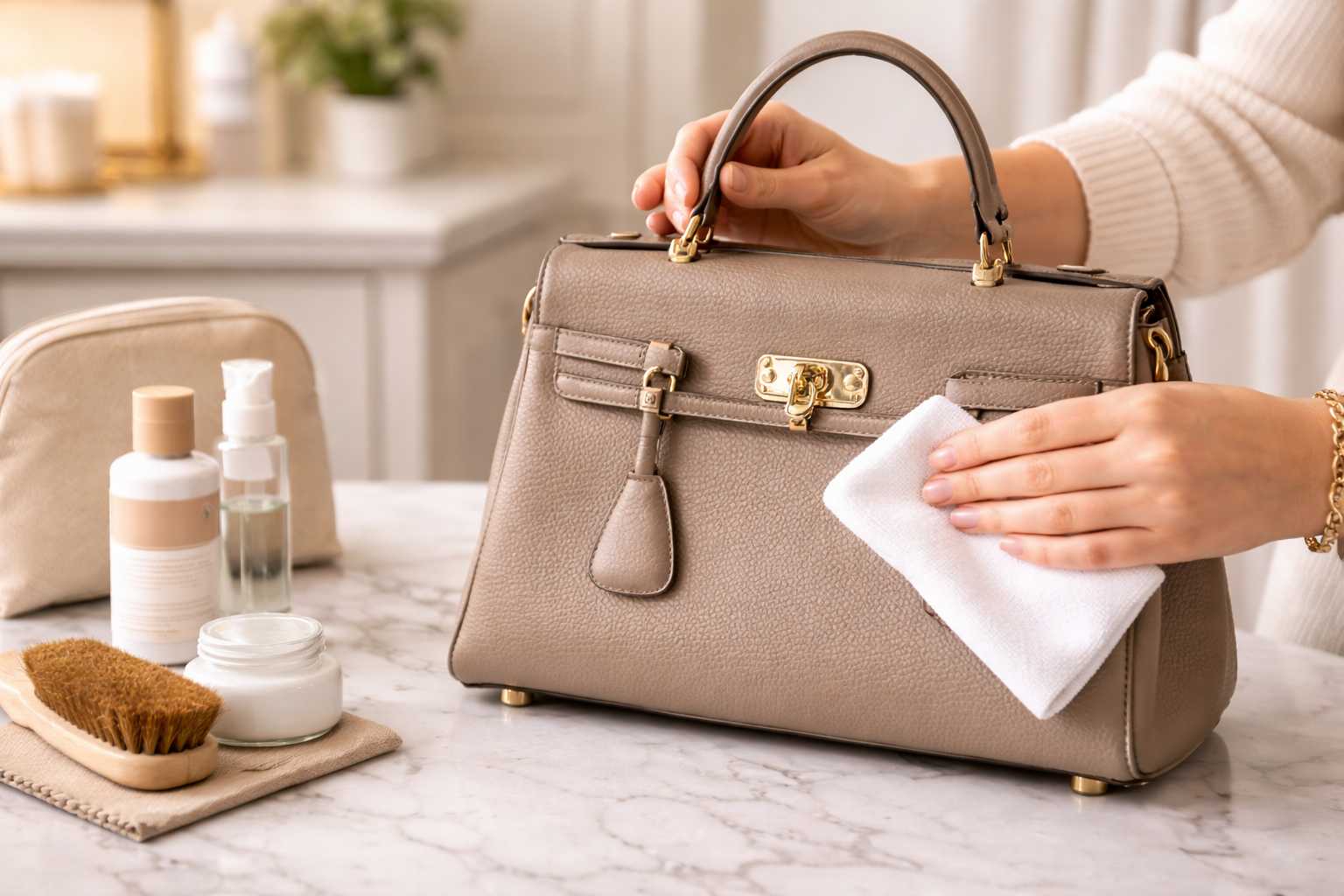
- Use a soft, dry cloth to wipe away surface dust
- Prepare a solution of mild soap and water
- Dampen a cloth slightly (avoid soaking it)
- Gently wipe the surface of the bag
- Use another clean, damp cloth to remove soap residue
- Let the bag air dry naturally
Avoid using excessive water, as it can damage leather.
Conditioning Leather
Leather tends to dry out over time, leading to cracks. Applying a leather conditioner every few months helps:
- Restore moisture
- Maintain softness
- Prevent cracking
Use a small amount and apply evenly using a soft cloth.
What to Avoid
- Harsh chemicals or alcohol-based cleaners
- Direct sunlight for drying
- Excessive moisture
- Abrasive cleaning tools
How to Clean Fabric and Canvas Handbags
Fabric and canvas bags are relatively easier to clean but still require proper care.
Cleaning Process
- Remove loose dirt using a soft brush
- Mix mild detergent with water
- Dip a cloth or sponge into the solution
- Gently scrub stained areas
- Wipe with a clean damp cloth
- Allow the bag to air dry completely
Machine Washing (If Applicable)
Some fabric bags can be machine washed:
- Use cold water
- Select a gentle cycle
- Avoid harsh detergents
- Air dry only
Always check the care label before machine washing.
How to Clean Suede and Nubuck Bags
Suede and nubuck are delicate materials that require dry cleaning methods.
Cleaning Tips
- Use a suede brush to remove dirt
- Use a suede eraser for small stains
- Brush gently in one direction
Handling Stains
Avoid using water, as it can damage suede. For tough stains, use specialized suede cleaners or consult a professional.
How to Clean Patent Leather Bags
Patent leather has a shiny, glossy finish and is relatively easy to maintain.
Cleaning Method
- Wipe the surface with a damp microfiber cloth
- Dry immediately with a soft cloth
Maintaining Shine
A small amount of petroleum jelly or a specialized polish can help restore shine and remove scuff marks.
How to Remove Common Handbag Stains
Different stains require different treatments.
Oil or Grease Stains
- Sprinkle baking soda or cornstarch
- Let it sit to absorb oil
- Brush off gently
Ink Stains
- Use a cotton swab dipped in rubbing alcohol
- Dab gently without rubbing
Makeup Stains
- Use mild soap and water
- Clean gently with a cloth
Water Stains
- Wipe the entire area with a slightly damp cloth
- Let it dry evenly
Quick action is essential to prevent stains from setting permanently.
Daily Maintenance Tips for Handbags
Simple habits can significantly extend the life of your handbag.
Best Practices
- Avoid placing bags on dirty or wet surfaces
- Keep bags away from direct sunlight
- Clean spills immediately
- Do not overload your bag
- Rotate between different bags
- Wash hands before handling light-colored bags
Consistency in daily care makes a big difference.
How to Store Handbags Properly
Proper storage is crucial for maintaining the shape and quality of your handbags.
Storage Tips
- Store bags in dust bags or pillowcases
- Keep them in a cool, dry place
- Stuff bags with tissue or paper to maintain shape
- Avoid hanging bags for long periods
- Keep away from moisture and humidity
Avoid
- Plastic bags (they trap moisture)
- Direct sunlight exposure
- Overcrowding in storage spaces
Maintaining Designer and Luxury Handbags
Luxury handbags require extra attention to preserve their value and appearance.
Special Care Tips
- Use original packaging for storage
- Handle with clean hands
- Avoid exposure to rain and humidity
- Clean gently and regularly
Professional Cleaning
Consider professional cleaning services once a year for expensive handbags to maintain their condition.
Common Handbag Care Mistakes to Avoid
Many people unknowingly damage their handbags through improper care.
Mistakes to Watch Out For
- Using harsh cleaning products
- Ignoring stains for too long
- Overloading the bag
- Storing in damp environments
- Using too much water during cleaning
Avoiding these mistakes helps preserve your bag’s quality.
How Often Should You Clean Your Handbags?
The frequency of cleaning depends on usage.
- Light cleaning: Weekly
- Deep cleaning: Every 1–3 months
- Conditioning (leather): Every 2–3 months
Regular maintenance prevents long-term damage.
Eco-Friendly Handbag Cleaning Tips
If you prefer sustainable methods, consider these options:
- Use natural cleaning solutions like mild soap
- Avoid chemical-heavy cleaners
- Use reusable cloths instead of disposable wipes
- Air dry instead of using heat
Eco-friendly care protects both your handbag and the environment.
Long-Term Benefits of Proper Handbag Care
Maintaining your handbags regularly leads to long-term benefits.
- Increased durability
- Better appearance over time
- Reduced replacement costs
- Higher resale value
- More sustainable fashion habits
A well-maintained handbag can last for years, making it a worthwhile investment.
Conclusion
Handbags are an essential part of everyday life, and proper care can make a significant difference in their longevity. By understanding the material, using the right cleaning techniques, and adopting good storage habits, you can keep your handbags looking stylish and new for years.
Investing time in maintenance not only protects your handbags but also enhances your overall style and saves money in the long run. With consistent care, your favorite handbags can remain durable, elegant, and functional for a very long time.