
Introduction
Bags are no longer viewed as simple storage accessories. In modern fashion and lifestyle culture, bags represent personality, practicality, status, and style. Whether someone purchases a handbag, tote bag, backpack, office bag, or travel bag, one of the most important decisions they face is choosing the material. Among the many materials available today, genuine leather and faux leather remain the two most popular options.
At first glance, these materials may appear very similar. In fact, many modern faux leather bags are designed so skillfully that distinguishing them from real leather can be difficult without close inspection. However, despite visual similarities, genuine leather and faux leather differ significantly in terms of composition, durability, texture, maintenance, environmental impact, pricing, and long-term value.
The growing popularity of sustainable fashion, vegan products, and affordable luxury has further increased interest in faux leather bags. At the same time, genuine leather continues to maintain its reputation for elegance, craftsmanship, and durability. As a result, consumers are often confused about which option is better for their lifestyle and budget.
Understanding the differences between genuine leather and faux leather bags is important because the wrong purchase can lead to disappointment. A buyer looking for long-term durability may regret purchasing low-quality synthetic material, while someone wanting a lightweight and low-maintenance fashion bag may find genuine leather unnecessarily expensive and demanding.
This detailed guide explores every important aspect of genuine leather and faux leather bags. From production methods and durability to sustainability and maintenance, this article provides a complete comparison to help buyers make informed decisions.
Understanding Genuine Leather
Genuine leather is a natural material created from animal hides, most commonly cowhide. Other animals such as goats, sheep, buffalo, and exotic animals may also be used depending on the product and market.
The process of transforming raw animal skin into usable leather involves several stages, including cleaning, tanning, dyeing, and finishing. This treatment converts perishable animal hides into strong, flexible, and long-lasting material suitable for fashion and industrial applications.
Leather has been used for thousands of years due to its durability and adaptability. Ancient civilizations relied on leather for clothing, footwear, armor, and carrying pouches. Over time, leather evolved from a necessity into a luxury material associated with craftsmanship and sophistication.
Today, genuine leather bags are considered premium products because of their quality, texture, and longevity. However, not all leather is the same. Many consumers assume that the term “genuine leather” automatically indicates top quality, but this is not always true. Leather is available in multiple grades, and understanding these differences is essential for evaluating leather bags correctly.
Types of Genuine Leather
Full-Grain Leather
Full-grain leather is widely regarded as the highest-quality leather available. It is made from the outermost layer of the hide, which retains the natural grain and texture.
- Unlike processed leather types, full-grain leather is not heavily sanded or altered. Small marks, wrinkles, and imperfections remain visible, giving each product a unique appearance.
- These natural variations are considered signs of authenticity rather than defects.
- One of the most remarkable characteristics of full-grain leather is its ability to develop a patina over time.
- Patina refers to the soft sheen and color enhancement that appears with age and use. Instead of deteriorating, full-grain leather often becomes more attractive as years pass.
Because it retains strong natural fibers, full-grain leather is highly durable and resistant to wear. High-quality full-grain leather bags can last for decades when maintained properly.
However, these bags are usually expensive due to the quality of raw material and skilled craftsmanship involved in production.
Top-Grain Leather
Top-grain leather is the second-highest quality leather. It is created by sanding away imperfections from the outer surface of the hide.
- This process gives the leather a smoother and more uniform appearance compared to full-grain leather.
- As a result, top-grain leather is commonly used in luxury handbags and fashion accessories that prioritize sleek aesthetics.
- Although sanding slightly reduces durability, top-grain leather remains strong and long-lasting. It is softer and more flexible than full-grain leather, making it popular for premium handbags.
Top-grain leather also resists stains better because manufacturers often apply protective coatings to the surface.
Genuine Leather
The term “genuine leather” refers to real leather, but it represents a lower grade compared to full-grain and top-grain leather.
- It is typically made using the remaining layers of the hide after higher-quality layers have been removed.
- Manufacturers process and emboss the material to imitate the appearance of premium leather.
- Genuine leather bags are more affordable than full-grain and top-grain leather bags, making them accessible to a wider audience. However, they are less durable and may show wear more quickly.
Although genuine leather still offers the appeal of real leather, it does not age as gracefully as higher-quality grades.
Bonded Leather
Bonded leather is made using leftover leather scraps combined with adhesives and synthetic materials.
- This material contains only a small percentage of actual leather. It is often used in low-cost products because it is inexpensive to produce.
- Bonded leather lacks the strength, durability, and aging qualities of higher-grade leather. Over time, it may crack, peel, or separate.
- Consumers often mistake bonded leather for genuine leather due to marketing terminology, so reading labels carefully is important.
Understanding Faux Leather
Faux leather is an artificial material designed to imitate the appearance and texture of real leather. It is also known as synthetic leather, vegan leather, PU leather, or artificial leather.
- Unlike genuine leather, faux leather does not use animal hides. Instead, it is made using synthetic materials such as polyurethane (PU) or polyvinyl chloride (PVC) applied to a fabric backing.
- Faux leather was originally developed as a cheaper alternative to genuine leather.
- Over time, improvements in technology have significantly enhanced its appearance and texture, making modern faux leather products more realistic than ever before.
The rise of ethical fashion and cruelty-free lifestyles has further increased demand for faux leather bags. Many consumers now choose synthetic materials to avoid animal-derived products.
Types of Faux Leather
PU Leather
Polyurethane leather, commonly called PU leather, is one of the most widely used synthetic leather materials.
- PU leather is softer, lighter, and more flexible than PVC leather. It can closely resemble real leather in appearance and texture, making it popular in fashion accessories.
- Compared to PVC, PU leather is considered less harmful environmentally because it uses fewer toxic chemicals during production.
- PU leather bags are generally affordable and available in many styles and colors.
PVC Leather
PVC leather is made using polyvinyl chloride combined with plasticizers.
- It has a shinier and more rigid appearance than PU leather. PVC leather is highly water-resistant and durable on the surface, making it suitable for certain applications.
- However, PVC leather is less breathable and often feels more plastic-like. It is also associated with greater environmental concerns because of the chemicals used in manufacturing.
Plant-Based Vegan Leather
As sustainability becomes more important, manufacturers are exploring eco-friendly leather alternatives made from natural materials.
Examples include:
- Pineapple leather
- Mushroom leather
- Apple leather
- Cork leather
- Cactus leather
These materials aim to reduce environmental impact while providing cruelty-free alternatives.
Although still developing, plant-based vegan leather is becoming increasingly popular among environmentally conscious consumers.
Appearance Differences Between Genuine and Faux Leather
One of the most noticeable differences between genuine leather and faux leather is appearance.
Genuine Leather Appearance
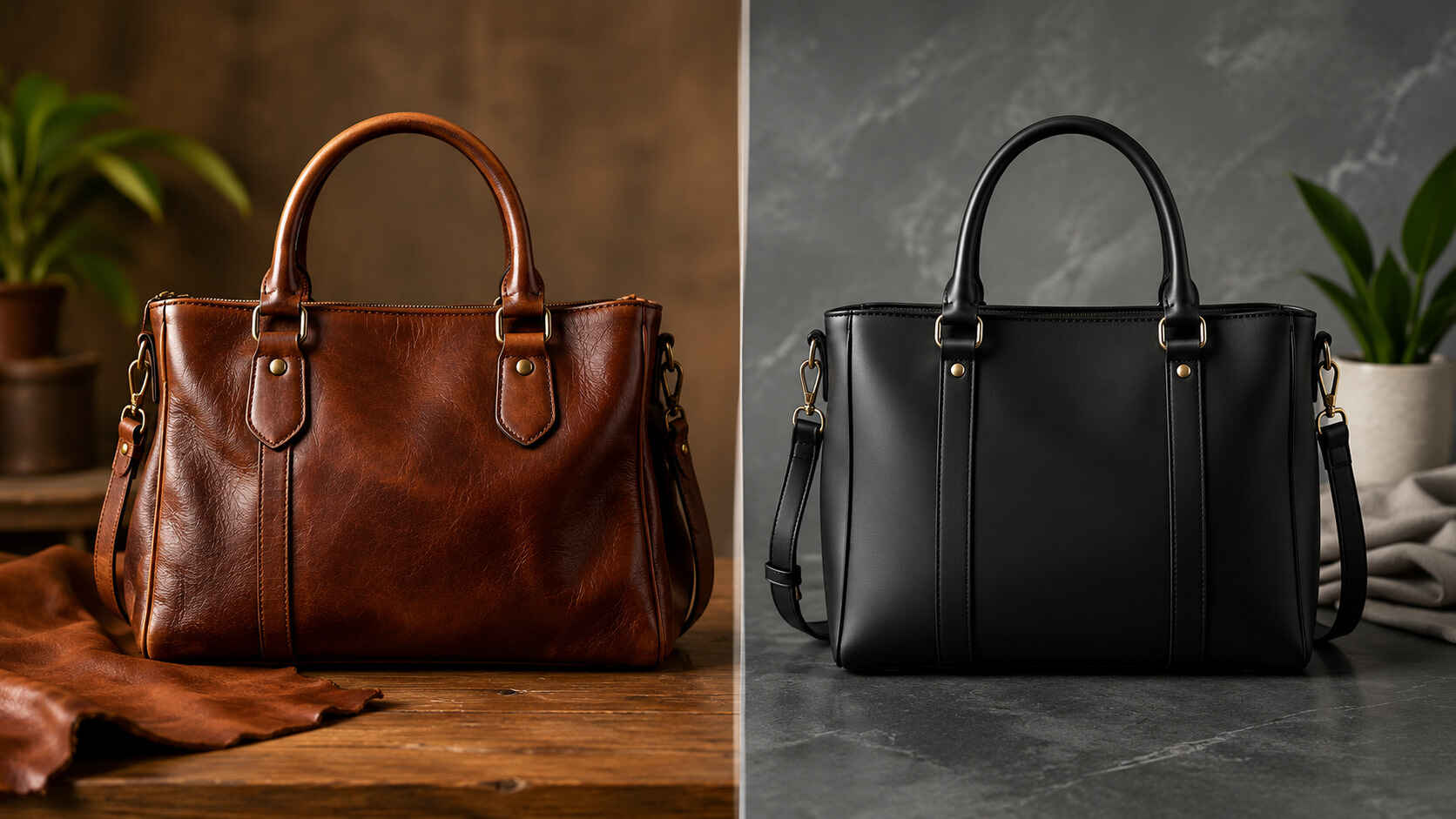
Real leather has natural variations in texture and grain. Small imperfections, wrinkles, and uneven patterns are common because leather comes from animal hides.
- These irregularities create a rich and authentic look that many people associate with luxury and craftsmanship.
- As genuine leather ages, it develops a patina that enhances color depth and character.
Faux Leather Appearance
Faux leather typically has a more uniform and consistent appearance. Because it is manufactured artificially, the texture often looks repetitive.
- Some high-quality faux leather products imitate natural grain patterns very effectively, but they still lack the depth and uniqueness of real leather.
- Unlike genuine leather, faux leather does not develop a patina. Instead, it may become dull or damaged over time.
Texture and Comfort
Texture plays an important role in how a bag feels during use.
Genuine Leather Texture
- Real leather feels soft, warm, and flexible. It becomes even softer with regular use.
- Leather is naturally breathable, which makes it comfortable in different weather conditions.
- The texture of genuine leather often changes slightly over time, giving it a lived-in and luxurious feel.
Faux Leather Texture
- Faux leather usually feels smoother and cooler because of its synthetic coating.
- Although some premium faux leather products imitate softness well, they generally lack the natural flexibility and breathability of genuine leather.
- Synthetic surfaces can sometimes feel sticky in hot or humid environments.
Durability Comparison
Durability is one of the biggest reasons many consumers choose genuine leather.
Genuine Leather Durability
High-quality leather bags can last for decades if cared for properly.
- Leather resists tearing and stretching because of its strong natural fibers.
- Minor scratches often blend into the material over time, adding character instead of ruining appearance.
- Premium leather bags are often viewed as long-term investments.
Faux Leather Durability
Faux leather bags usually have a shorter lifespan.
- Over time, synthetic coatings may crack, peel, or flake, especially in areas exposed to friction or sunlight.
- Although high-quality faux leather can last several years, it generally cannot match the longevity of genuine leather.
Aging Process
The aging process highlights one of the most unique differences between these materials.
Genuine Leather Aging
- Real leather improves with age. Patina develops naturally, creating richer color and texture.
- Many leather enthusiasts appreciate signs of wear because they make the bag look more personal and distinctive.
Faux Leather Aging
- Faux leather usually deteriorates rather than improves.
- Instead of developing character, it may lose shine, crack, or peel with prolonged use.
- This difference greatly affects long-term appearance and value.
Water Resistance
Genuine Leather
- Leather absorbs moisture because it is porous.
- Excessive exposure to water can cause stains, stiffness, or mold if untreated.
- Waterproof sprays and conditioners help protect leather bags.
Faux Leather
- Faux leather has a synthetic coating that repels water effectively.
- This makes faux leather bags more practical in rainy weather or humid conditions.
- However, trapped moisture can sometimes damage the fabric underneath the coating.
Breathability
Breathability affects comfort and storage conditions.
Genuine Leather
- Natural pores allow airflow, preventing heat and moisture buildup.
- This makes leather more comfortable for prolonged handling.
Faux Leather
- Synthetic coatings block airflow, causing heat retention and moisture buildup.
- This lack of breathability may create discomfort in hot climates.
Weight Comparison
- Genuine leather bags are usually heavier because of dense natural fibers.
- Faux leather bags are lighter and easier to carry, making them practical for daily commuting or travel.
- Weight preferences vary depending on lifestyle and intended use.
Maintenance Requirements
Caring for Genuine Leather
Leather requires regular maintenance to preserve quality.
This includes:
- Cleaning with leather-safe products
- Conditioning to prevent drying
- Protecting from moisture
- Proper storage
Neglecting maintenance may lead to cracking or fading.
Caring for Faux Leather
- Faux leather is easier to maintain.
- Most stains can be removed using a damp cloth and mild soap.
- However, once faux leather begins peeling or cracking, repair is often difficult.
This makes faux leather attractive for seasonal or trend-based purchases.
Environmental Impact
Environmental concerns influence many modern purchasing decisions.
Genuine Leather Environmental Impact
Leather production involves:
- Animal farming
- Water consumption
- Chemical tanning
However, leather’s long lifespan may reduce replacement frequency.
Faux Leather Environmental Impact
- Traditional faux leather relies heavily on petroleum-based plastics.
- These materials are not biodegradable and contribute to landfill waste.
- Plant-based alternatives aim to reduce these issues.
Ethical Considerations
Some consumers avoid genuine leather because it involves animal products.
- Others argue that leather is a byproduct of the meat industry and reduces waste.
- Faux leather appeals to vegan and cruelty-free consumers, though environmental concerns remain important.
- Ethical decisions often depend on personal beliefs and priorities.
Which Is Better for Different Lifestyles?
Genuine Leather Is Best For:
- Professionals
- Long-term use
- Luxury fashion lovers
- Durable investment pieces
Faux Leather Is Best For:
- Budget-conscious shoppers
- Trend-focused fashion
- Animal-free preferences
- Lightweight daily bags
Conclusion
The difference between genuine leather and faux leather bags extends far beyond price or appearance. Each material offers unique benefits and drawbacks that influence durability, maintenance, comfort, ethics, and environmental impact.
Genuine leather stands out for its timeless appeal, strength, luxurious feel, and long lifespan. It is ideal for those seeking investment pieces that improve with age.
Faux leather, on the other hand, offers affordability, versatility, and cruelty-free alternatives suited to modern fashion trends and fast-changing styles.
Ultimately, the best choice depends on individual priorities, including budget, lifestyle, sustainability concerns, and personal values. Understanding these differences allows consumers to make informed decisions and choose bags that truly fit their needs and expectations.