
Introduction
Faux leather bags have become extremely popular in the fashion world because they offer the stylish appearance of real leather at a much more affordable price. They are widely used for handbags, backpacks, office bags, travel bags, wallets, and accessories. Faux leather is also preferred by many consumers because it is considered a cruelty-free alternative to genuine leather.
However, despite its attractive appearance and affordability, faux leather has one major drawback: peeling. Over time, many faux leather bags begin to crack, flake, or peel, especially around handles, corners, straps, and frequently used areas. This damage can make even a beautiful bag look old, worn out, and unusable.
Peeling faux leather is one of the most common problems bag owners face. The good news is that in many cases, peeling can be repaired, restored, or temporarily improved with the right techniques and products. While severely damaged faux leather may not return to its original condition completely, proper restoration can significantly improve the appearance and extend the lifespan of the bag.
This detailed guide explains everything you need to know about fixing peeling faux leather bags. From understanding why faux leather peels to step-by-step repair methods, prevention tips, restoration products, maintenance techniques, and long-term care strategies, this article covers the complete process in depth.
What Is Faux Leather?
Before learning how to repair peeling faux leather, it is important to understand what faux leather actually is. Faux leather is a synthetic material created to imitate the look and feel of genuine leather. It is commonly made using:
- Polyurethane (PU)
- Polyvinyl chloride (PVC)
- Synthetic fabric backing
- Plastic coatings
Manufacturers apply plastic-based coatings over fabric to create a leather-like texture and finish.
Faux leather is widely used because it is:
- Affordable
- Lightweight
- Stylish
- Easy to manufacture
- Available in many colors and textures
However, unlike genuine leather, faux leather does not age naturally. Instead of developing a rich patina over time, the synthetic coating eventually weakens and starts peeling.
Why Faux Leather Bags Peel
Understanding the causes of peeling helps prevent further damage and improves repair success.
1. Material Breakdown Over Time
Faux leather contains plastic compounds that naturally degrade with age.
- Over time, exposure to air, heat, moisture, and friction causes the coating to lose flexibility.
- As the surface dries out, cracks begin to form, eventually leading to peeling and flaking.
- Unlike real leather, faux leather cannot regenerate or soften naturally with age.
2. Heat and Sunlight Exposure
Direct sunlight and high temperatures are major causes of peeling. Excessive heat dries out synthetic coatings and weakens adhesives holding the layers together.
Bags left:
- Inside hot cars
- Near windows
- Under direct sunlight
- Close to heaters
often deteriorate faster.
3. Moisture and Humidity
- Although faux leather is somewhat water-resistant, long-term moisture exposure damages the material.
- Humidity can weaken the bond between layers, while trapped moisture may cause bubbling or cracking.
- Improper storage in damp environments accelerates deterioration.
4. Friction and Frequent Use
Areas exposed to repeated friction usually peel first.
Common high-friction areas include:
- Handles
- Corners
- Shoulder straps
- Bottom edges
- Zipper surroundings
Constant rubbing gradually wears away the protective surface.
5. Poor Manufacturing Quality
- Low-quality faux leather bags often peel much faster because manufacturers use thinner coatings and weaker adhesives.
- Budget bags may begin cracking within months, especially if heavily used.
- Higher-quality faux leather generally lasts longer because it uses better synthetic materials and stronger construction.
Can Peeling Faux Leather Be Repaired?
One of the most common questions people ask is whether peeling faux leather can actually be fixed.
The answer depends on:
- The severity of damage
- The size of peeling areas
- The quality of the bag
- The repair method used
Minor peeling and surface cracks are usually repairable at home using adhesives, paint, repair compounds, or patching techniques.
Severe peeling across large areas may be difficult to restore permanently. However, even heavily damaged bags can often be improved enough for occasional use.
It is important to understand that faux leather repairs are usually cosmetic rather than permanent structural solutions.
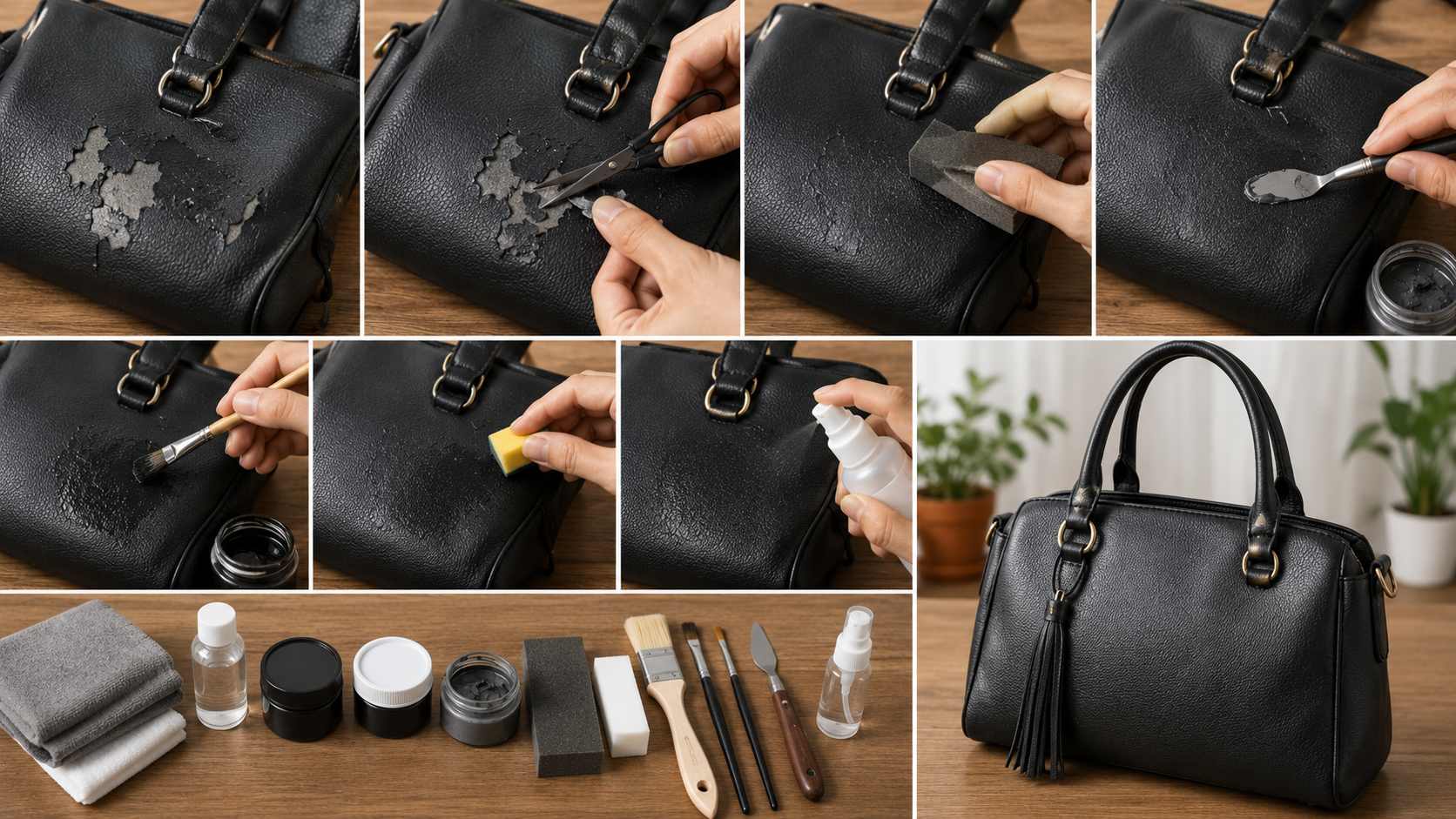
Tools and Materials Needed for Faux Leather Repair
Before starting the repair process, gather the necessary materials.
Common repair supplies include:
- Soft cloths
- Mild soap
- Sandpaper or nail buffer
- Faux leather repair kit
- Leather paint or acrylic paint
- Fabric glue or leather adhesive
- Small scissors
- Cotton swabs
- Sponge applicators
- Sealant or finishing spray
Using proper tools improves repair quality and durability.
Step-by-Step Guide to Fixing Peeling Faux Leather Bags
Step 1: Clean the Bag Thoroughly
Cleaning is essential before any repair work.
Dust, oil, dirt, and loose particles interfere with adhesives and paint.
Cleaning Process
- Wipe the bag using a soft damp cloth.
- Use mild soap diluted in water.
- Avoid soaking the material.
- Remove all surface dirt carefully.
- Let the bag dry completely.
Cleaning helps create a smooth surface for restoration.
Step 2: Remove Loose Peeling Material
- After cleaning, inspect the peeling areas carefully.
- Use small scissors or fingers to gently remove loose flakes.
- Do not pull aggressively because this may enlarge the damaged area.
- The goal is to create a smooth and stable repair surface.
Step 3: Sand the Surface Lightly
Light sanding smooths uneven edges and improves paint adhesion.
Use:
- Fine-grit sandpaper
- Nail buffer
- Soft sanding block
Sand gently around peeling areas to avoid further damage.
This step helps create a cleaner and more professional-looking finish.
Step 4: Apply Faux Leather Repair Compound
Repair compounds help fill cracks, holes, and uneven textures.
How to Apply
- Use a small spatula or applicator.
- Spread thin layers over damaged areas.
- Smooth the surface evenly.
- Allow drying between layers.
Multiple thin layers usually work better than one thick application. Some repair kits include textured sheets to mimic leather grain patterns.
Step 5: Paint the Repaired Area
Color restoration is one of the most important parts of faux leather repair.
Choosing the Right Paint
Use:
- Faux leather paint
- Acrylic leather paint
- Flexible fabric paint
Choose a shade that closely matches the original bag color.
Painting Process
- Apply thin coats using a sponge or soft brush.
- Blend edges carefully.
- Allow each coat to dry fully.
- Add additional layers if needed.
Avoid thick paint buildup because it may crack later. Flexible paints work best because faux leather bends during use.
Step 6: Apply Protective Sealant
Sealants protect repaired surfaces from future peeling and cracking.
Benefits of Sealants
- Improve durability
- Add flexibility
- Reduce moisture damage
- Create smoother appearance
Apply thin even coats and allow proper drying time.
How to Fix Small Peeling Areas
Minor peeling is easier to repair than extensive damage.
For small areas:
- Clean the surface
- Remove loose flakes
- Apply matching paint
- Seal the area
This quick repair method works well for corners and small scratches.
How to Repair Large Peeling Sections
Large peeling areas require more extensive restoration.
Fabric Patch Method
When surface layers are badly damaged, patches may help.
Steps
- Cut matching faux leather fabric
- Apply adhesive carefully
- Press firmly into place
- Blend edges with paint
This method works best for flat surfaces.
How to Fix Peeling Handles and Straps
Handles and straps experience heavy friction, making them more prone to peeling.
Repair Options
- Wrapping with fabric or scarves
- Repainting surface
- Replacing straps completely
- Using adhesive leather tape
In some cases, replacing handles may provide better long-term results.
DIY Methods for Fixing Peeling Faux Leather
Many people prefer DIY solutions using household items.
- Acrylic Paint Method: Acrylic paint mixed with fabric medium creates flexible coverage. This is one of the most popular budget repair methods.
- Mod Podge Method: Some DIY enthusiasts use Mod Podge as a sealant. It helps hold peeling flakes temporarily but may not provide long-lasting durability.
- Nail Polish Method: Small scratches can sometimes be hidden using matching nail polish.
However, this method is best only for tiny spots because nail polish may crack over time.
Common Mistakes to Avoid
- Pulling Loose Material Aggressively: This enlarges peeling areas.
- Applying Thick Paint Layers: Heavy paint cracks more easily.
- Skipping Cleaning Steps: Dirty surfaces reduce repair adhesion.
- Using Harsh Chemicals: Strong cleaners may worsen peeling.
- Ignoring Early Damage: Small cracks spread quickly if untreated.
Tips to Prevent Faux Leather Bags from Peeling
- Store Bags Properly: Store bags in cool dry areas, inside dust covers and keep it way from humidity Stuffing bags helps maintain shape.
- Avoid Overloading: Heavy weight strains handles and corners.
- Clean Regularly: Dust and oils weaken synthetic coatings over time. Gentle regular cleaning prevents buildup.
- Use Protective Conditioners: Some products designed for synthetic leather improve flexibility and reduce dryness. Always test products first.
How Long Do Faux Leather Bags Last?
The lifespan depends on:
- Material quality
- Frequency of use
- Storage conditions
- Maintenance
Low-quality faux leather may peel within 1–2 years. High-quality faux leather with proper care can last 5 years or longer.
Is Professional Repair Worth It?
- Professional repair may help expensive faux leather bags with sentimental value.
- However, professional restoration costs sometimes exceed the value of the bag itself.
- For inexpensive bags, DIY repair is usually more practical.
When Should You Replace Instead of Repair?
Replacement may be better if:
- Peeling covers most surfaces
- Fabric underneath is damaged
- Structural parts are broken
- Repairs repeatedly fail
Sometimes restoration costs and effort outweigh benefits.
Faux Leather vs Genuine Leather Durability
One reason genuine leather remains popular is durability.
Unlike faux leather:
- Real leather ages naturally
- Develops patina
- Rarely peels
Faux leather is more affordable but generally has a shorter lifespan. Understanding this trade-off helps buyers make informed purchasing decisions.
Sustainable Alternatives to Traditional Faux Leather
As consumers seek eco-friendly options, newer materials are emerging.
Examples include:
- Mushroom leather
- Cactus leather
- Pineapple leather
- Apple leather
These alternatives aim to reduce plastic use while maintaining leather-like appearance.
How to Make Faux Leather Bags Last Longer
- Rotate Usage: Using the same bag daily increases wear.
- Protect High-Friction Areas: Handle wraps and protective covers reduce stress.
- Avoid Folding: Creasing weakens synthetic coatings.
- Maintain Proper Storage Shape: Stuff bags with soft fabric or paper.
Emotional Attachment and Restoration
- Many people repair peeling bags not because of cost, but because of sentimental value.
- A gifted bag, favorite travel bag, or longtime accessory may hold emotional importance beyond appearance.
- Restoration helps preserve these memories while extending usability.
Conclusion
Peeling faux leather bags are a common problem, but they do not always need to be discarded immediately. With proper repair techniques, cleaning methods, restoration products, and preventive care, many faux leather bags can regain a cleaner and more attractive appearance.
Although faux leather cannot match the aging qualities and durability of genuine leather, it remains a popular choice because of affordability, style variety, and cruelty-free appeal. Understanding how to repair and maintain faux leather helps extend its lifespan and reduce unnecessary waste.
Whether you choose simple touch-up methods or complete restoration, patience and proper technique make a significant difference. Caring for faux leather bags properly from the beginning can also delay peeling and preserve appearance for years.